From Wall Street to Belgrade: What U.S. Entrepreneurs Must Know About Banking in Serbia
Introduction
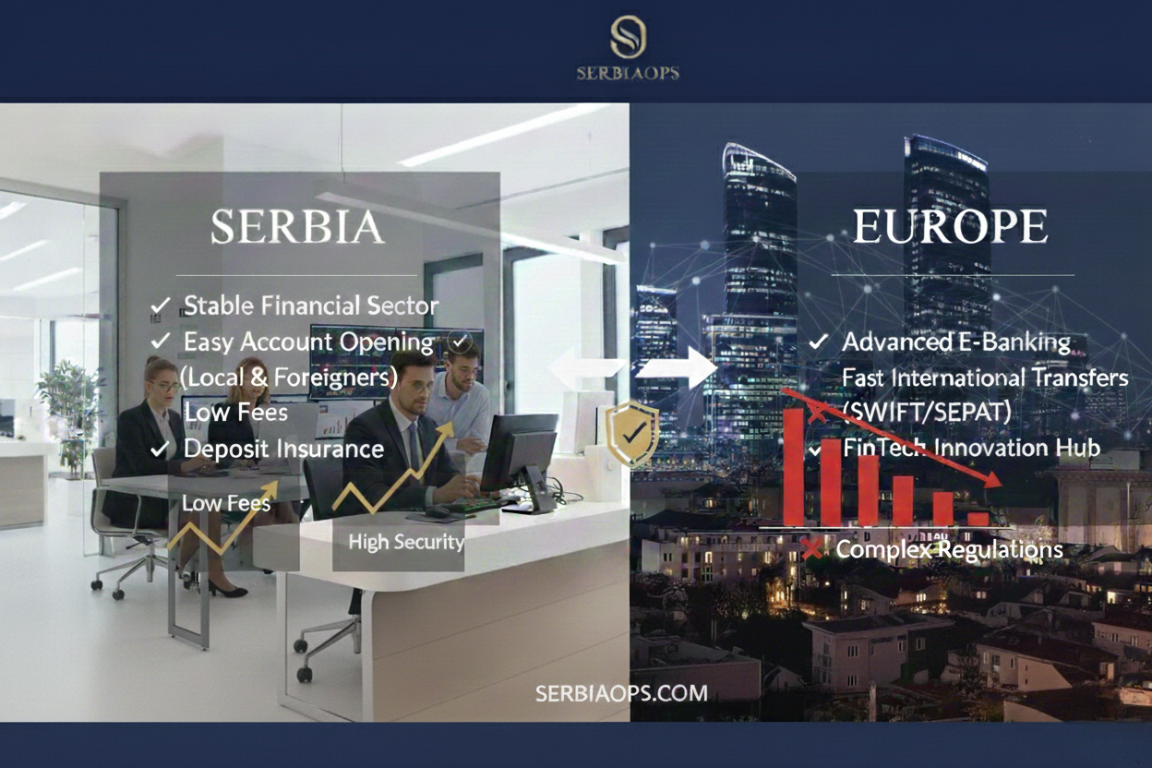
Banking in Serbia is both modern and highly regulated. For U.S. entrepreneurs used to digital-first onboarding, the Serbian system can feel traditional, but it is transparent and built to meet international compliance standards. The National Bank of Serbia (NBS) supervises all financial institutions, ensuring stability and strict anti-money laundering (AML) controls.
KYC and Account Opening
To open a corporate bank account, founders must present an APR extract, PIB certificate, founding act, director’s passport, and proof of registered office. https://www.apr.gov.rs
Banks require a Know Your Customer (KYC) file, including a statement of the source of funds. This requirement is enforced by the National Bank of Serbia. https://nbs.rs
Some banks may ask for the founder’s temporary residence permit, while others accept foreign passports. SerbiaOps ensures you apply to banks most receptive to international clients.
Choosing the Right Bank
International banks like Raiffeisen, UniCredit, and OTP operate in Serbia alongside local banks such as Banca Intesa and Komercijalna Banka. https://nbs.rs
Approval is always at the bank’s discretion, but a complete and compliant file significantly increases the chances of success.
Cross-Border Payments and Compliance
Banks in Serbia apply detailed checks on international payments. Entrepreneurs must provide invoices, contracts, and proof of service delivery for transfers abroad. https://nbs.rs
The NBS requires reporting for cross-border loans and equity investments. Official guidelines outline which transactions need reporting and deadlines. https://www.nbs.rs/export/sites/NBS_site/documents-eng/propisi/propisi-dev/pregled_misljenja_dev_pos_ino_eng.pdf
Serbia’s compliance framework ensures that U.S. founders operate within internationally recognized financial rules, reducing exposure to penalties.
Geopolitical Context
Reuters recently reported that U.S. sanctions on Serbia’s Russian-owned oil company NIS were postponed, showing how geopolitics can influence banking and investment strategies. https://www.reuters.com/business/energy/us-sanctions-serbias-russian-owned-oil-company-nis-postponed-tanjug-news-agency-2025-09-28
Despite regional complexities, Serbia’s banking sector remains stable and attractive for foreign-owned companies seeking to balance European market access with cost efficiency.
Integrating with Global Platforms
Maintaining a Serbian bank account allows seamless integration with global payment providers like Stripe and Wise. https://wise.com
This makes Serbia an operational hub not just for local activities but also for international clients and partners.
Conclusion
For U.S. founders, banking in Serbia requires preparation but delivers strong advantages once established. With SerbiaOps managing your KYC pack and introducing you to the right banks, Belgrade becomes a bridge between U.S. capital and European growth.