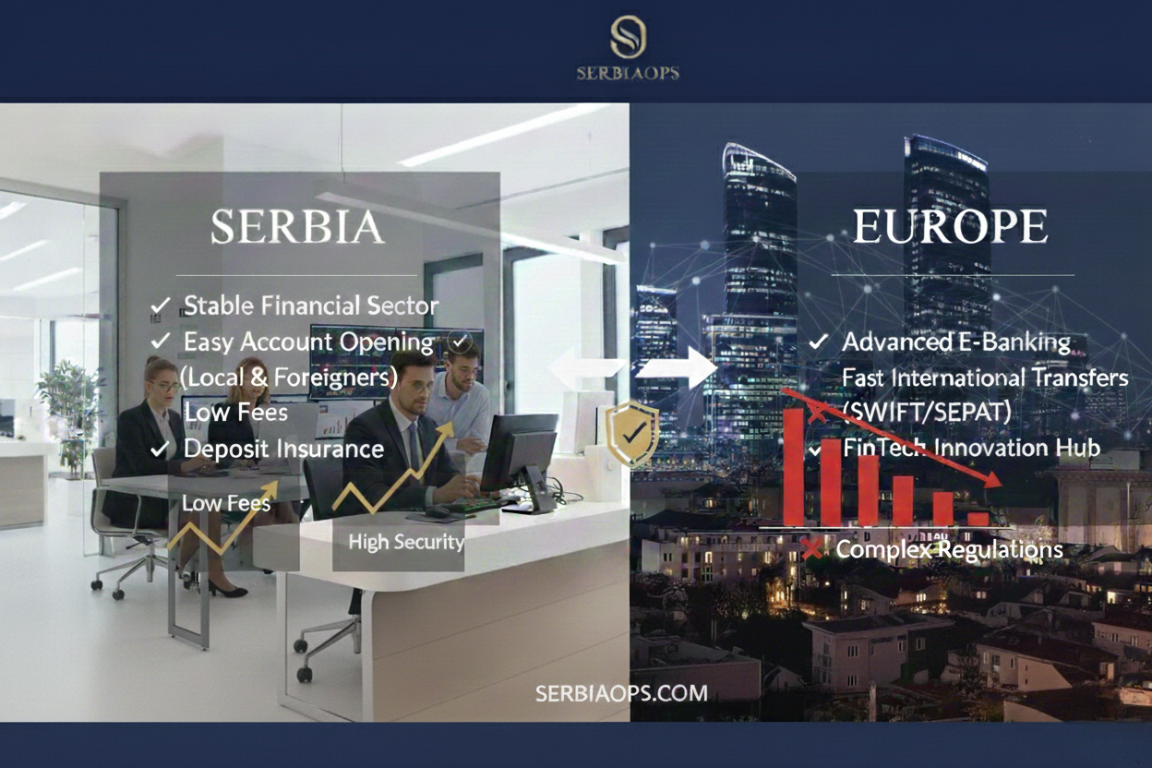
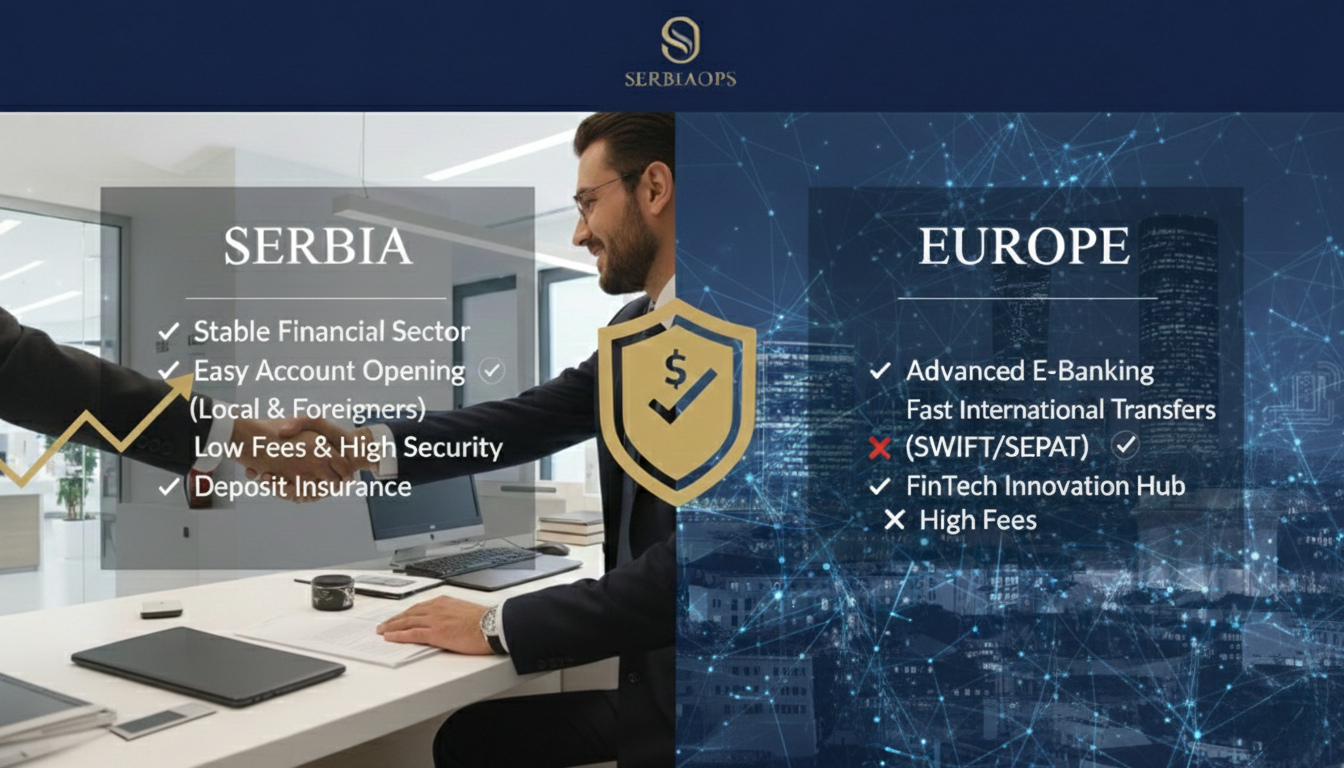
For founders and investors, the search for the “perfect” jurisdiction one that balances fiscal efficiency with a high-caliber workforce is a constant challenge. However, in 2026, Serbia has emerged as the clear economic engine of the Western Balkans.
At SerbiaOps, we specialize in helping international businesses navigate this high-yield market. Here is why the world’s most pragmatic funders are moving their operations here.
1. The Fiscal Advantage: One of Europe’s Most Competitive Tax Climates
While much of Western Europe faces rising corporate tax pressures, Serbia maintains a highly competitive 15% Corporate Income Tax (CIT). For U.S.-based entities, this is particularly attractive due to established bilateral cooperation and a transparent investment landscape.
• Proof Point: The U.S. Department of State confirms that U.S. investors enjoy a level playing field in Serbia, citing a well-educated labor force and generous investment incentives.
• Resource: 2025/2026 Investment Climate Statement: Serbia – U.S. State Dept.
2. Rapid Market Entry: The 5-Day Business Setup
In a fast-paced venture capital environment, time-to-market is everything. Serbia has aggressively digitized its bureaucracy. Registering a DOO (Limited Liability Company) as a foreigner is now one of the most efficient processes in Europe.
• The Insight: According to the International Trade Administration (ITA), Serbia is a strategic “bridge” for U.S. companies, offering duty-free access to over 1 billion consumers through various Free Trade Agreements.
• Resource: Serbia Country Commercial Guide – International Trade Administration (Trade.gov)
3. A Tech Talent Goldmine without the Silicon Valley Overhead
For tech founders, the cost of hiring IT talent in Serbia remains the primary “low-hanging fruit.” Belgrade and Novi Sad have become premier hubs for AI, blockchain, and software engineering.
• The World Bank Analysis: Current reports highlight that Serbia’s economy is pivoting toward an innovation-driven model, with a focus on high-value sectors and R&D.
• Resource: Serbia Economic Outlook – The World Bank
4. Strategic Incentives for R&D and Intellectual Property
Serbia doesn’t just want your back office; it wants your innovation. The “IP Box” regime allows for a massive 80% deduction of qualified royalty income, effectively bringing the tax rate on IP-derived profits down to approximately 3%.
• Funding Opportunities: Organizations like USAID have historically supported the Serbian private sector through workforce development and innovation hubs, fostering a sustainable ecosystem for new ventures.
• Resource: USAID Serbia: Private Sector Engagement
Why Trust SerbiaOps?
Navigating a foreign market requires more than just a lawyer; it requires a partner who understands the pragmatic realities of the local landscape. SerbiaOps provides a bridge for U.S. and global funders, ensuring that your transition into the Serbian market is seamless, compliant, and optimized for maximum ROI.